Care has the Power to Transform. Safer Care Ensures it’s for the Better.
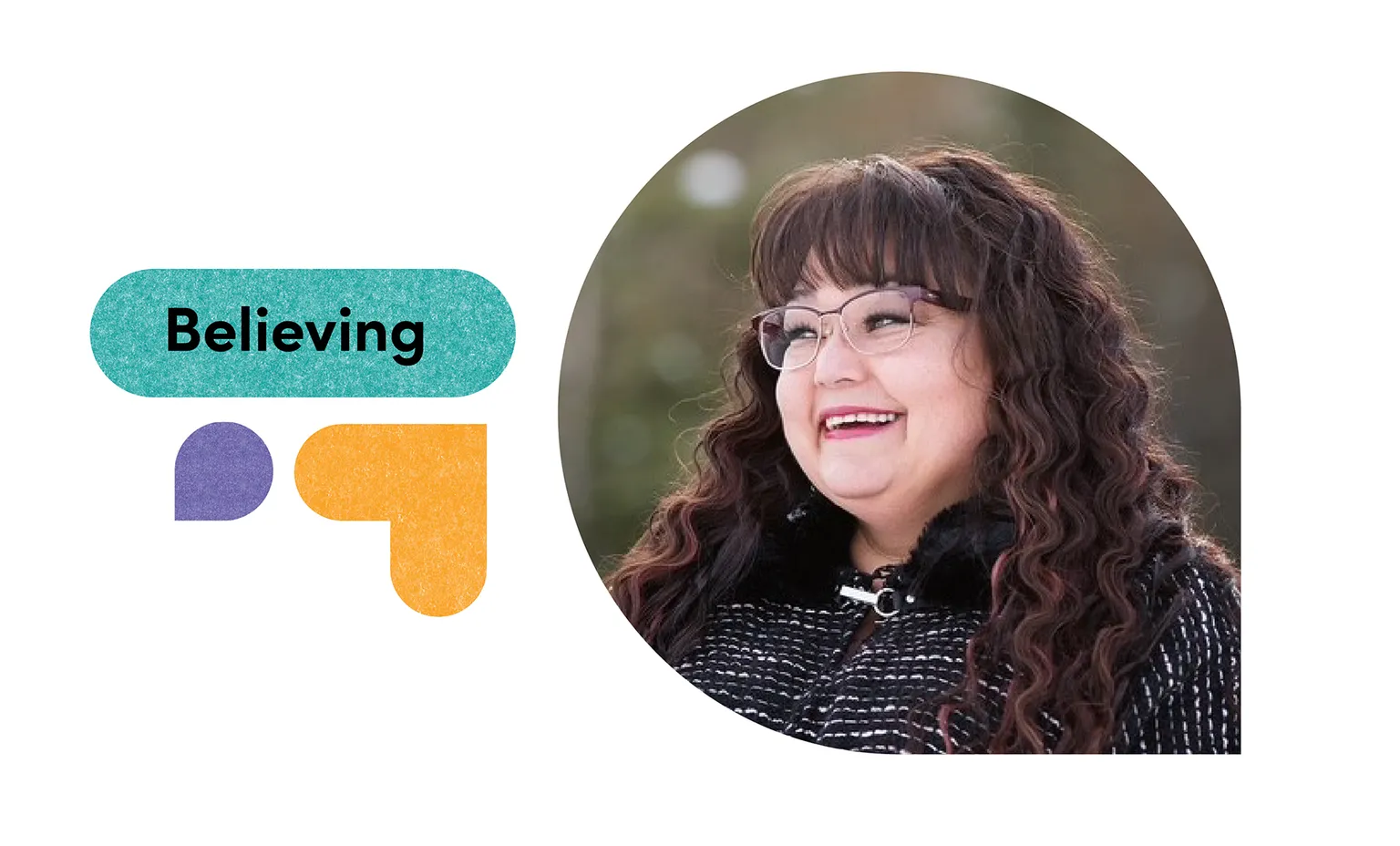
Michelle Grant's experience navigating care across the Yukon and British Columbia holds important lessons for healthcare providers and system leaders about safer care. Drawing on her experience as a patient and patient partner, Michelle shares why believing patients, having a trusted presence and creating space for patient voices can make a difference.
- Author
- Interviewee: Michelle Grant, Patient Partner, Yukon
Voices Shaping Safer Care is a blog series featuring reflections and experiences from people across health and social care in Canada. Through stories from patients, caregivers, healthcare providers, leaders and community partners, the series explores the everyday moments, relationships and systems that influence safety.
While in the elevator of a Vancouver hospital, Michelle Grant was surprised to see a poster promoting Indigenous support services available to patients. It was exactly the kind of support she would have appreciated receiving. There were just two problems.
First, she was nearing the end of her treatment and wouldn’t be able to make use of it.
Second, she had arrived in Vancouver already shaped by a health journey that offered little cultural safety and a lot to recover from.
Grant had been a patient at the Vancouver hospital for nearly seven weeks, after being airlifted from Whitehorse, Yukon – a journey of almost 1,500 kilometers. She said that her back pain had been so excruciating that “I knew something was horribly wrong.”
But that pain hadn’t come out of nowhere.
The two years that changed who she was
For two years, Grant had been seeking answers to pain that began as discomfort in her back. She visited her community health clinic, then a doctor who had provider care to her in the past. An X-ray was eventually ordered, but not for the part of her back that hurt.
Grant’s back pain continued to get worse. She pushed for a CT scan and learned that her request had been triaged in the least-urgent category – meaning that she may be waiting six more months for the CT scan, and potential answers. Grant asked if she could be moved to the most urgent category, but she never heard back. The CT scan never happened.
As her discomfort became debilitating pain, Grant moved in with a friend who had an adjustable bed and a walk-in shower. “At this point, I was practically bedridden,” she shares. “I lost confidence, was depressed, and fighting suicidal thoughts.”
Grant and her loved ones were at a loss about what to do next.
“Throughout these years, I was continually treated by too many medical staff like I was drug-seeking, with nuances of racism and a lack of cultural and community knowledge and understanding sprinkled in,” says Grant. “The last time I went to the health centre, I was told that I had more pills at home than they did, and not to come back unless I had something new happening.”
The morning Grant woke up feeling like something was horribly wrong, a friend drove her two hours to the nearest emergency room. She was admitted three times in four days. CT scans were discussed but not provided.
“I asked my daughter to get us to the hospital and told her we weren’t leaving,” says Grant. “I just had a feeling something bad was going to happen.”
On the fourth day, a persistent effort from the ER doctor on shift resulted in the imagery Grant had long advocated for. That’s when things started moving quickly: less than an hour after the scan, Grant found out she would be airlifted to Vancouver within the next day.
By the time Grant received the surgery she needed, her spinal cord had begun to collapse from a mass that had already destroyed more than two of her vertebrae.
“The best guess initially was multiple myeloma,” says Grant. “But after the surgery, the confirmed diagnosis was a rare form of blood cancer.”
Once medical imaging identified the abnormality on Grant’s spine, her care became urgent. But getting to that point had been the opposite of urgent. Grant is still navigating the trauma it has caused her.
“My self-esteem took such a kicking,” she says. “I’m shocked how I went from a strong-minded, independent advocate to an isolated, scared, quiet girl.”
Lessons for safer care
Grant’s experience is shaped by her identity as a member of the inland Teslin Tlingit First Nation community, by the geographic reality of living in a northern community two hours from the nearest emergency room, and by the necessity and distance of inter-jurisdictional travel when significant care is needed.
“Living in the north is beautiful, but very scary when you need to get to where the best help can be given and where resources and technology are most easily accessible,” says Grant.
While her journey continues to this day, it also holds important lessons for healthcare providers and system leaders that can help improve the safety of the care they provide.
Listening and believing are not the same
Trained as a social worker, Grant sees how some of the principles social workers practise can be applied in a healthcare context to support safer care for patients.
“We’re taught that if somebody says they’ve been hurt, the best thing to do is believe them, even if you have questions, because you can never take that back,” she explains. “And when they’re believed, it helps soften a lot of the trauma. Had I been believed until medical research showed different, it would have changed a world of things for me.”
A trusted presence can improve the care experience
Grant says the biggest influence on her sense of safety was having her adult daughter with her in Vancouver as a medical chaperone – a family member who is a partner in the care.
“My daughter was my connection to my family and home, and somebody I could trust,” she explains. “By then, I didn’t want to share with anybody else what was going on. I was shutting down because it was hard enough to be vulnerable and to ask for help and to be rejected.”
Create space for patient voices
“One of the first things I lost was my voice. And looking back, nothing good can come of that,” says Grant. “Allowing each other space for voices makes a difference. I know I felt safer and better when a medical professional would just take a second to check in and ask, ‘Did you understand that? Do you have any questions?’ but in a way that they’re not walking out the door when they’re saying it.”