Safer Care Through Culture, Connection and Community
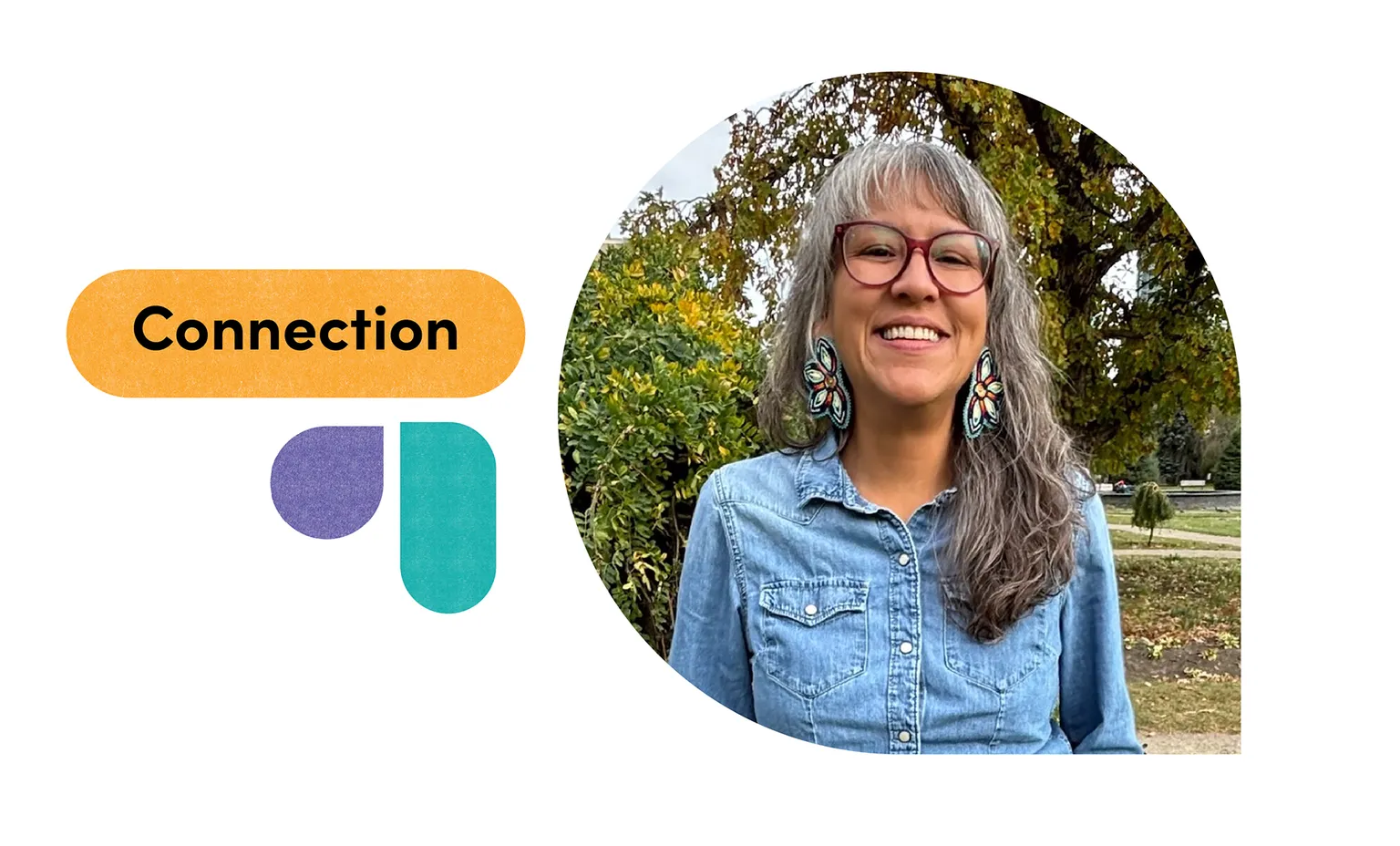
For Jackie DeCoteau-Gill, offering someone safety at end-of-life is what is owed to each of us as humans. Supporting people who are going to the spirit world is just as important as supporting birthing mothers, and she’s providing that support.
- Date
- October 22, 2026
Voices Shaping Safer Care is a blog series featuring reflections and experiences from people across health and social care in Canada. Through stories from patients, caregivers, healthcare providers, leaders and community partners, the series explores the everyday moments, relationships and systems that influence safety.
Working across both formal and informal care settings, Jackie DeCoteau-Gill supports First Nations, Inuit and Métis people and families through some of life's most important transitions. She is known in her community as a safe person who sees and holds the whole of who they are. To her, safer care isn't delivered or provided – it's offered and created through the power of human connection.
Safety lives in the spaces we hold for one another
When she speaks of her work providing palliative care to First Nations, Inuit and Métis individuals and families in Edmonton, Alberta, not once does Jackie DeCoteau-Gill use the word ‘patient.’
“I’m not working for the system – I’m working for you as a person,” she says. “Technically, I’m a death doula – but I call myself a palliative care auntie. I just notice I’m able to break down barriers.”
DeCoteau-Gill has many roles as an auntie – from birth to death, including supporting families through the grief of a loved one’s journey back to the spirit world. She founded Kokums Helper Society in Edmonton, and her goal is to create an Indigenous end-of-life care centre in Edmonton. This is all on top of being a trusted source of guidance for people in her community – a calling that is grounded in a heart-centred approach of seeing people for who they are.
“From a community perspective, I am that auntie who loves you and just cares for you no matter what you do,” says DeCoteau-Gill. “And that’s of value.”
DeCoteau-Gill speaks of safety not as something one provides or delivers, but as a state of being – a connection that one can offer or feel: “To me, being a safe person is working from my heart, not from a checklist or in ways that look at saving money,” she says. “I have a toolbox of things to help you figure out what you need to feel connected and safe.”
From barriers to belonging
DeCoteau-Gill recalled a community member who was facing end-of-life: “He was quite religious, and he was really scared of what was going to happen to him,” DeCoteau-Gill remembers. “I said to him, ‘you’ll go to a good place and one day, I’ll be able to pray to you. All this human craziness will be gone and you’ll just be light.’”
To DeCoteau-Gill, offering someone safety at end-of-life is simply what is owed to each of us as humans. “When you have value as a person, no matter what your role is, it naturally creates a sense of safety because you’re able to ask questions and to see that you belong – you fit in, no matter what,” she explains. “Just as we never leave birthing mothers alone, why wouldn’t we support people who are going to the spirit world to help relieve some of the unknown?”
When safer care takes root
DeCoteau-Gill began reconnecting with her culture as an adult – a journey that has shaped the wisdom she now offers to community members through all of life's stages.
As a cultural helper who offers care during some of people’s most meaningful moments, she believes there are three interconnected things that matter most when it comes to supporting Indigenous people in a safe way, and they’re about showing up with and for one another.
Care that’s grounded in culture
“The hill I’ll die on is that Indigenous people need to look after Indigenous people,” says DeCoteau-Gill. “People don’t realize how much trauma we still carry. When you’re an Indigenous person working for an Indigenous person, you see that load and can help them unpack it a little bit at a time.”
DeCoteau-Gill emphasizes how important it is for Indigenous people to have the freedom to practice their culture, the seasonality of which is central to caring for the community as a whole – even if it doesn’t align with the schedules of a typical colonial work structure.
“The summertime is a busy ceremony time and harvesting time in my community. That’s when I gather medicine for use during the year and pick sweetgrass for people,” she explains. “So when we ask for time off work, we’re actually working hard to get the things we need to do our work and be good community members. In order for us to be connected, have teachings, and care for our being, we need a different type of work-life schedule.”
Care that supports the whole person
To DeCoteau-Gill, care is about people. That means focusing on the well-being of the whole person at a fundamentally human level – not just the symptoms they are presenting, and not trying to rush through an appointment, but understanding and tending to a person as a whole.
“Indigenous people have teachings in our heart,” she says. “When I apply for a health grant, I have to quantify how many dollars I’m saving – but really, I’m looking at somebody within their four dimensions. What support do they need spiritually, physically, emotionally and mentally?” Those teachings, she notes, govern the way of knowing and being, which ultimately guides the way people care for each other. Having that wholistic lens leads to better outcomes overall.
Care that is part of a community
Relatedly, DeCoteau-Gill stresses the benefits of care that happens at a community level.
“If you’re looking at care with a Western lens, you might have a somatic therapist, a doctor and a support worker and they’re all doing independent jobs,” she explains. “Whereas in Indigenous ways of ceremony and governance, it’s taking care of the same things within community where everybody’s working together.”
Not only does this make the care experience more seamless for the person being cared for, it also means they don’t have to retraumatize themselves by repeating their story to different people.
And the benefits extend to the team, too. “When a team knows a person and can empower them to make their own decisions, we’re lightening the load for them and for ourselves, too,” she says.