What Shapes Safer Care?
Safer care is shaped every day through conversations, decisions, relationships, environments and systems. Every interaction is an opportunity to strengthen safety. Every moment counts.
Join people across Canada during Canadian Patient Safety Week as we reflect, learn and explore what shapes safer care – and the role each of us plays in creating it together.
What shapes safer care?
Explore what shapes safer care – and the role each of us plays in creating it together.
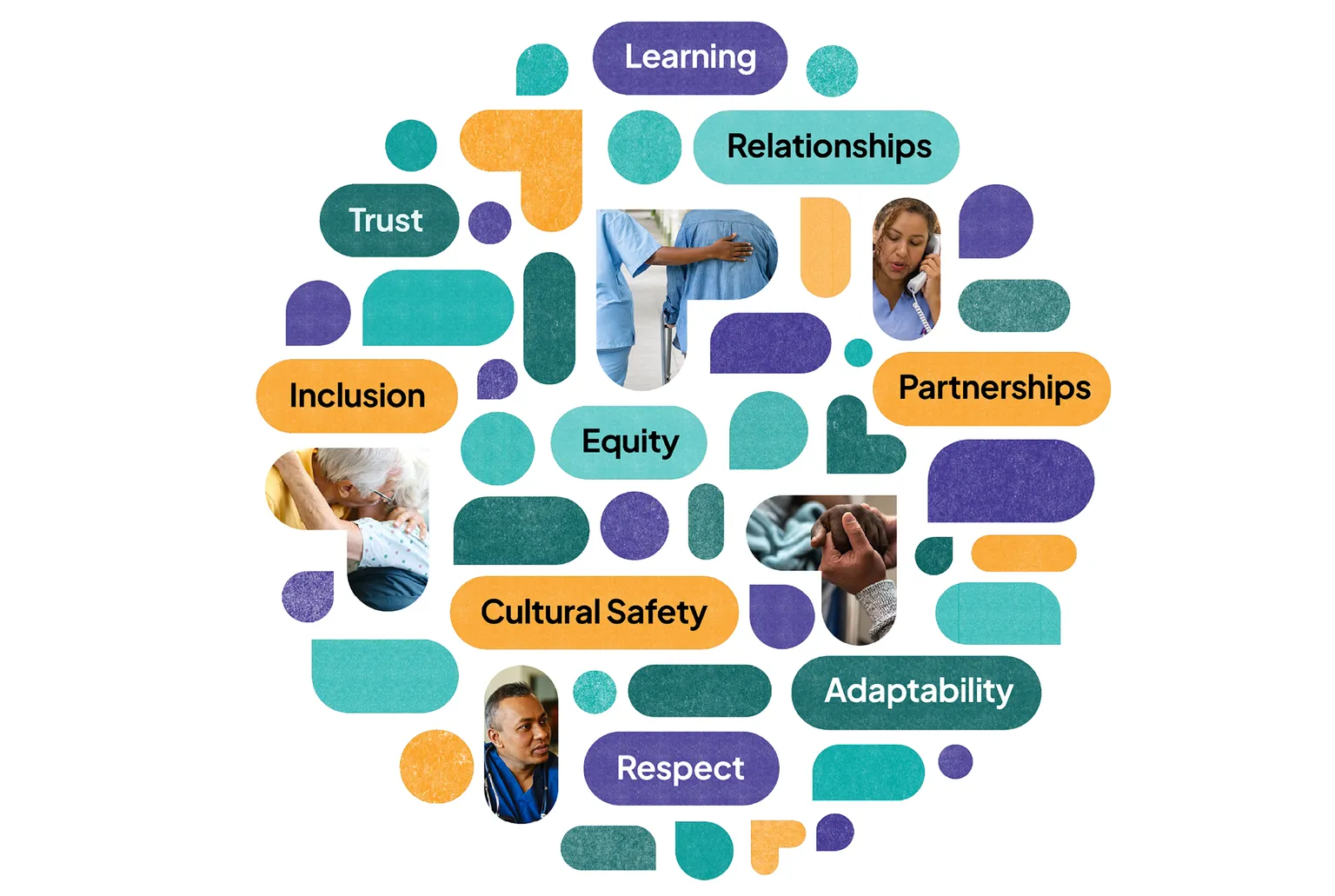
Every interaction, environment decision and system can influence safety in care. Some moments are easy to notice. Others are small but just as important. For Canadian Patient Safety Week 2026, we are inviting people across health and social care to reflect on one question: What shapes safer care? Together, we'll explore the many ways people, relationships, environments and systems shape safer care every day.
Webinars: How collaboration shapes safer care
Join us for two special Canadian Patient Safety Week webinars, part of Healthcare Excellence Canada's Spotlight Series.
The Spotlight Series brings together people and diverse voices from across the country to share what's working, learn from experience and consider how we can build on progress together.
In this conversation, health system and organizational leaders, people working at the point of care and people with lived experience will discuss how collaboration across health and social care system influences the quality and safety of care. Through stories and examples, panelists will share lessons learned and practical strategies for strengthening partnerships, aligning goals, improving communication and creating systems that support safer care.
Please note that we are hosting two Spotlight Series webinars for Canadian Patient Safety Week. The October 27 webinar will be French-first with English simultaneous interpretation, and the October 29 webinar will be English-first with French simultaneous interpretation. The speakers for each webinar will be different.

Explore what shapes safer care
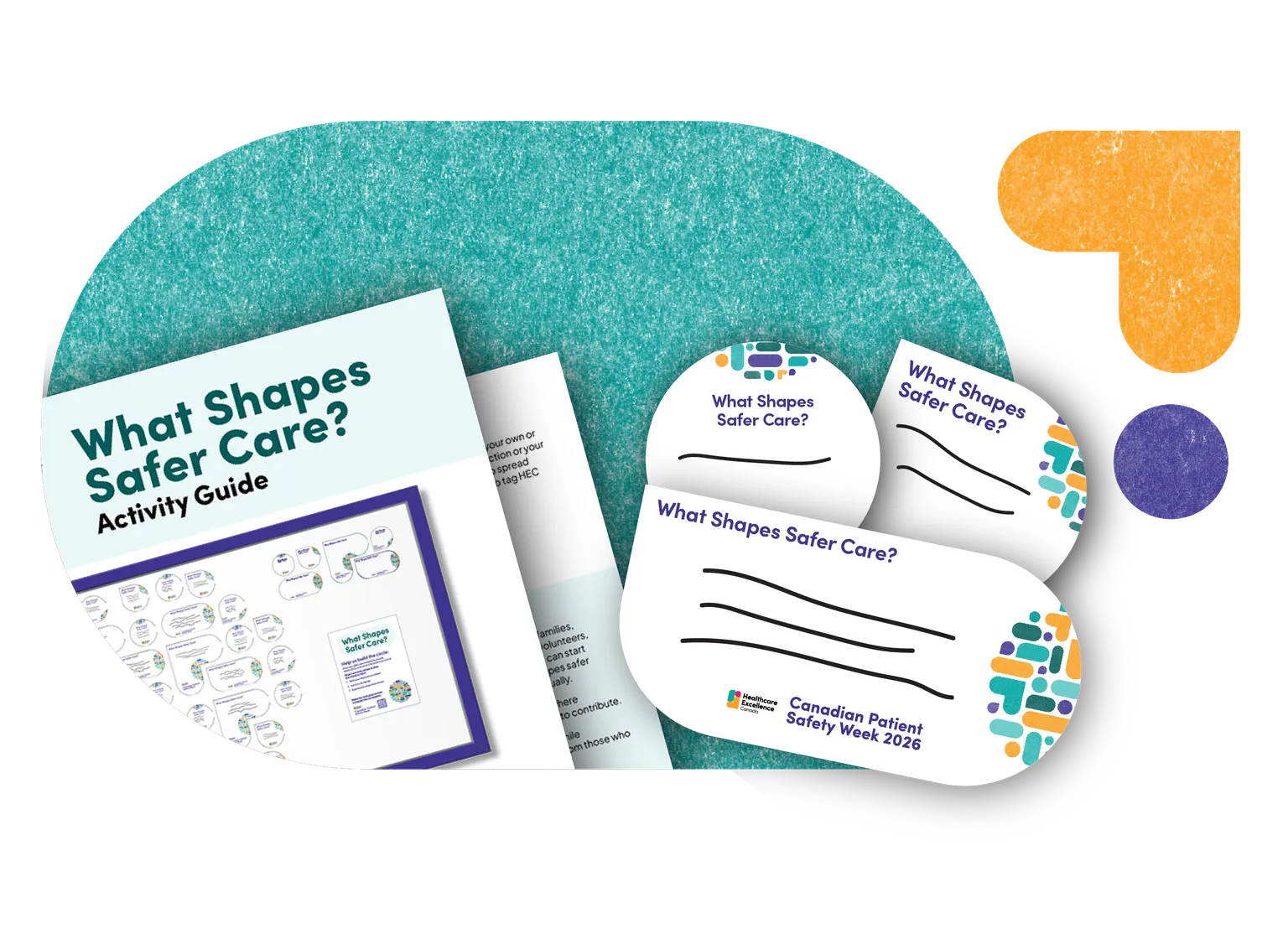
Reflect on what shapes safer care in your setting with an activity designed to spark conversation, encourage learning and support shared understanding.
Use the What Shapes Safer Care? Activity guide with colleagues, patients, families and care partners to explore the moments, relationships and conditions that influence safety – and identify opportunities to strengthen care together.
Download CPSW 2026 resources
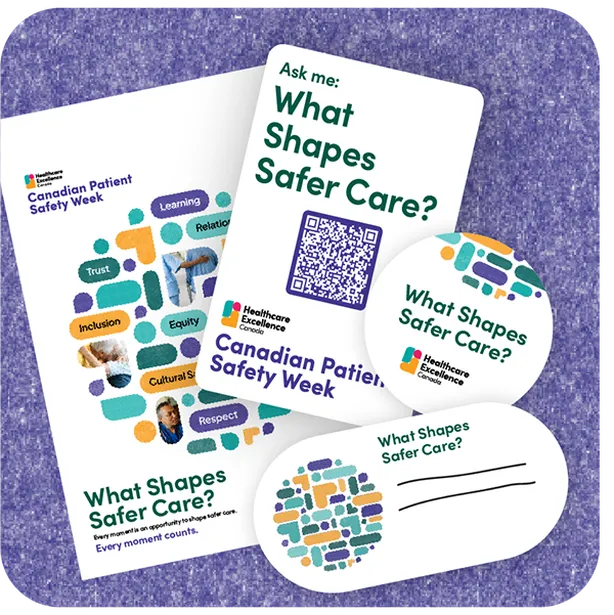
Download ready-to-use resources to help promote and participate in CPSW 2026.
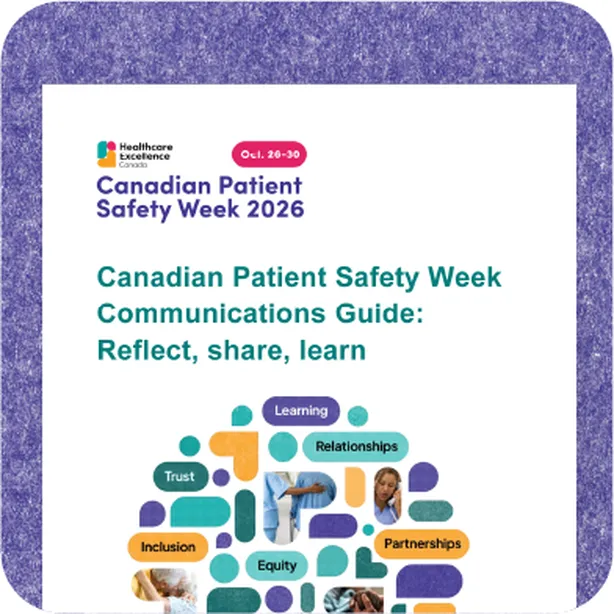
CPSW Communications Guide
PDF (824 KB)Use this toolkit to promote CPSW, showcase your local activities and encourage others to participate.
Slide Deck Cover
PPTX (1 MB)Use this slide deck cover to promote CPSW during meetings and events.
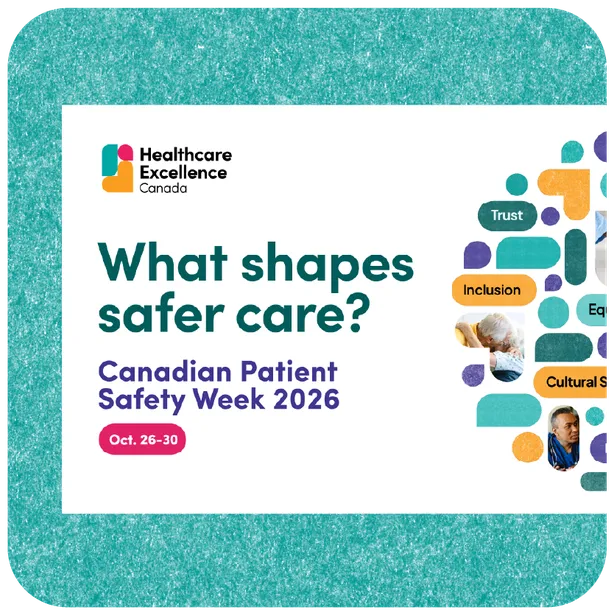
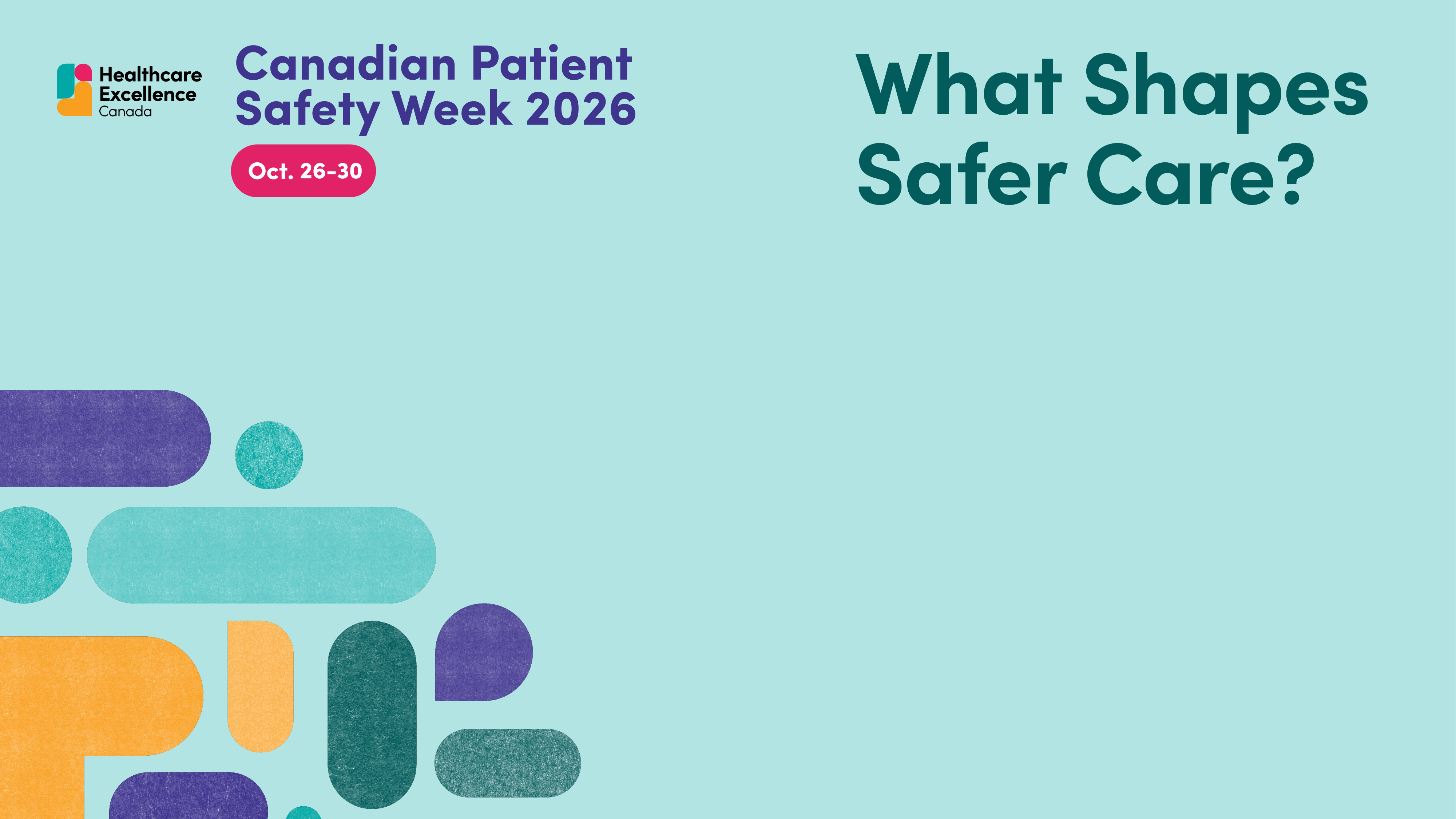
Virtual Meeting Backgrounds
PNG (1 MB)Use these backgrounds to spark conversations about what shapes safer care during virtual meetings.
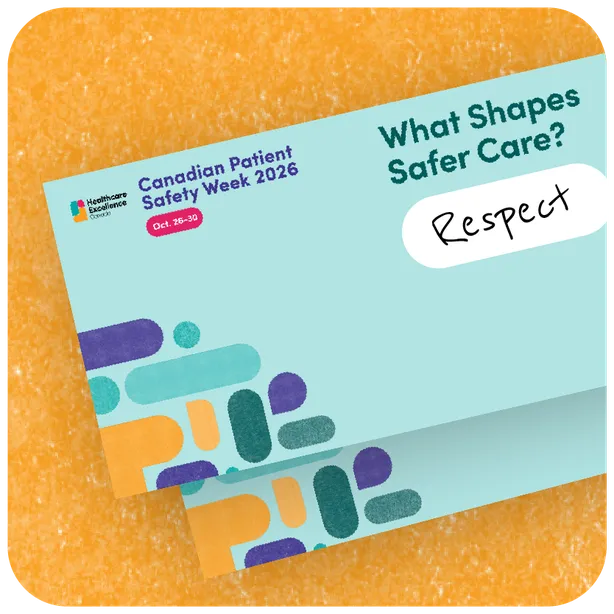
Social Media Post Templates
PPTX (3 MB)Use these templates to create your own CPSW-branded social media posts.
Digital Swag Bundle
ZIP Folder (11MB)Our 2026 CPSW campaign bundles are now sold out, but you can still access print-ready versions of the campaign materials for local production.
What shapes safer care for you?
Your experiences, perspectives and ideas can help shape safer care.
Add your voice to this year’s campaign by sharing:
One word that shapes safer care for you, and/or
A moment or experience that shaped safer care for you
We welcome contributions that reflect the diversity of people, roles, settings and lived experiences across health and social care.
Submissions may be featured anonymously as part of this year’s campaign.
Sharing on social media? Use #CPSW2026 to join the conversation and explore stories shared by others.

What we're hearing from you
Mattering
Administrator, Nunavut
"When I feel heard and mattered. When my concerns are validated and not dismissed. A clinician telling me 'oh this shouldn't happen' erodes the initial trust I bestow on the client-clinician relationship. On the flip side, when I meet a clinician who says 'I can see why that's frustrating, that's not fair' or takes the time to investigate and understand my concern from my point of view, I feel that I am heard and that clinician believes my concerns matter."
Collaboration
Nurse, Newfoundland and Labrador
"When everyone on the care team is working towards the same goal, we cover many aspects of a clients care to ensure the safest delivery of services."
Transparency
Patient, Nova Scotia
"I was discharged from an inpatient stay after my doctor told me my magnesium and potassium were low, and that dialysis would correct them through the bath during my treatment.
After my first outpatient dialysis treatment, I noticed around the end of my treatment that I was on a low K-bath - and only then remembered the low levels at all.
My nurse had no idea what I was talking about. The doctor's updated orders never made it from my inpatient chart into the outpatient binder. Because I caught it, my bloodwork was rushed as life- threatening and I got a magnesium pill immediately. I would have gone home, while at real risk of a stroke or heart attack.
The only reason I noticed something was off was because my doctor had taken the time to explain how they were going to help with my magnesium and potassium levels. This education about my current state let me know what to watch for, I understood my own care and dialysis treatments well enough to see that something was wrong."
Communication
Patient, Saskatchewan
"My anesthesiologist admitted that he didn't know a lot about managing Type 1 Diabetes with an insulin pump while under anesthesia. He took the time to listen to me explain the illness as well as how to use my dexcom and insulin pump to manage my blood sugars. I showed him what buttons to press and everything he needed to know. I came out of surgery with great numbers. It was very meaningful that he took not only admitted to not knowing something but was willing to learn from a patient."
Voice
Administrator, Ontario
"Voice can shape safer care because people need to feel comfortable speaking up when something does not seem right. In the workplace, this could be as simple as a nurse questioning a process that may create a risk, a receptionist identifying a recurring communication gap, or a newer employee suggesting a different way of doing something. When people know they can raise concerns or respectfully disagree without being dismissed or judged, their experience becomes part of the solution. Creating space for those voices strengthens psychological safety, teamwork, and ultimately safer care. I encourage this in my day-to-day work as a Manager of Primary Care, Medical Services."
Psychological safety
Physician, British Columbia
"In the OR, I once asked for a scalpel at a particular point during a C-section. The scrub nurse was very experienced and knew I would usually ask for Metzenbaum scissors at that step. So she asked if I was sure!
On reflection, I realised she was right, and we completed the step safely.
I’m so glad she feels comfortable speaking up when something doesn’t seem quite right. That’s the kind of team culture we need in surgery."
Inclusion
Quality Improvement Lead, Ontario
"Being a part of the discussion, and planning when it comes to my care, or the care of my family members helps to better understand the situation, provide accurate information and get a better sense of what the goals are and why which helps with compliance and understanding what to watch for related to signs and symptoms. Knowledge is power. Collaboration and inclusion bring forward knowledge exchanges that help drive better patient outcomes."
Listening
Patient, Quebec
"I became almost completely paralyzed from a neurotoxin antibiotic I was given over a period of 2 years as an inpatient on a surgical ward. I told them every day about my worsening neuropathy, ataxia and aphasia… they didn’t listen. I demanded discharge and sued. I also became a patient partner… listen … trust the lived experience."
Empathy
Patient, Quebec
"As a former refugee from Yugoslavia and neurodivergent person, I often feel like I have to perform before being heard. So when I talk to another human being, it is important for me that they do not judge me nonverbally for my stimming or lack of eye contact. It takes a special kind of human to hold someone else´s pain in your hand and be delicate with it. And the people who took the time to listen and not make any comments as I am speaking or any sudden movements or shifts in their body language or tone, I have felt safe to be myself with. It greatly impacts safe care for traumatized people."
Build the foundations of safer care
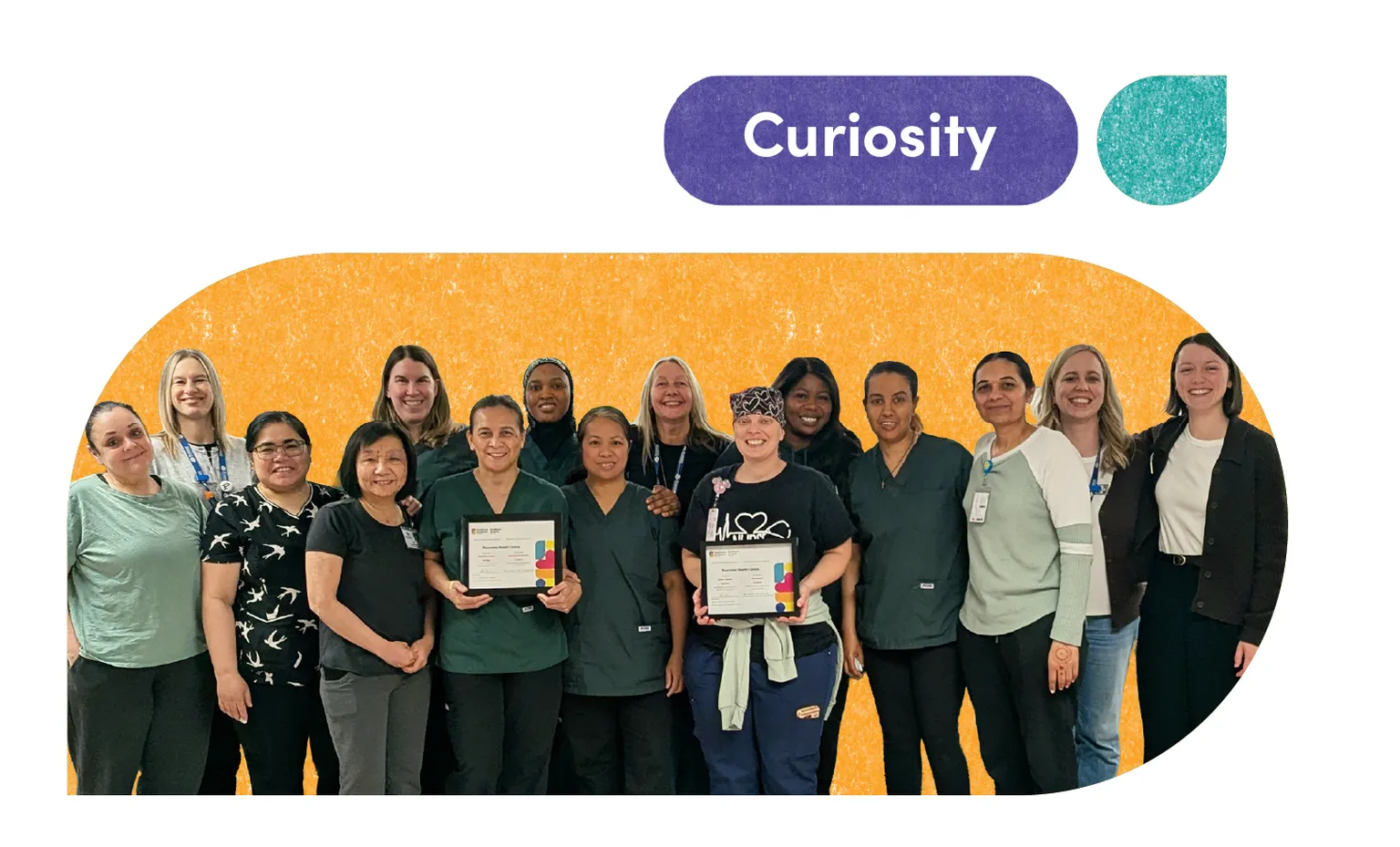
The Foundations of Healthcare Excellence is a self-paced e-learning series and the recommended starting point for exploring core concepts that underpin healthcare excellence: engagement-capable environments, cultural safety, patient safety, and health equity.
Each module includes practical tools, guided reflection and discussion activities to help learners apply their learning within their own organization or care setting.
Together, the modules help build a shared understanding of the foundational concepts that support high-quality, safe and equitable care.
About CPSW
Canadian Patient Safety Week (CPSW) is an annual campaign organized by Healthcare Excellence Canada that brings people together around a shared goal: making healthcare safer for everyone.

Sign up to receive updates
Sign up for HEC’s newsletter to receive CPSW updates, campaign resources and information on how to get involved.
Emaill: cpsw-snsp@hec-esc.ca